
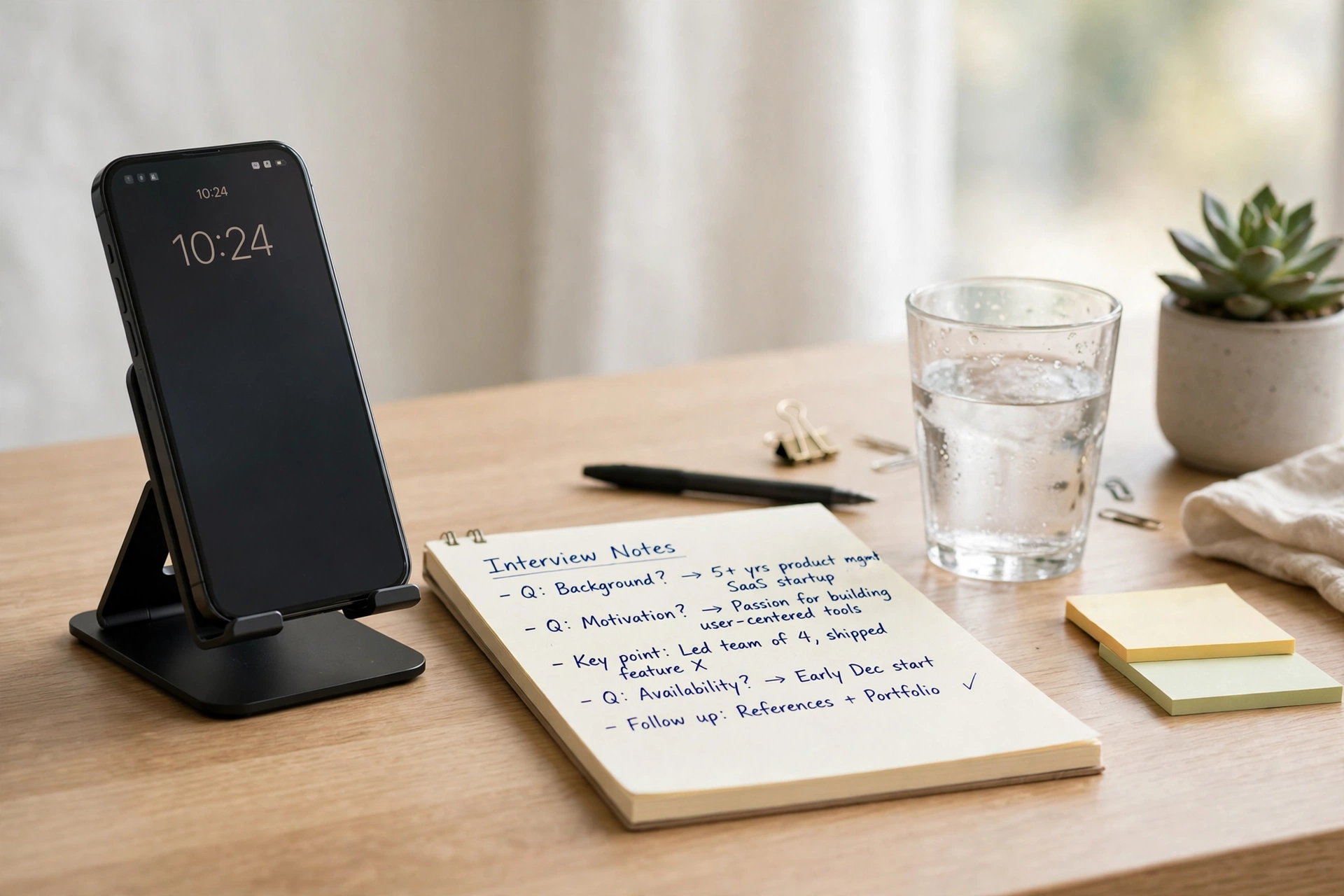
How to Prepare for a Phone Interview: An Easy Guide to Sound Confident
Quick answer: how to prepare for a phone interview
Yes, you can sound calm and confident on a phone interview with a little prep, and most of it takes less than one hour. To learn how to prepare for a phone interview the easy way, research the company, write down your answers to common questions, charge your phone, and find a quiet room with good signal. The full guide below shows you how to prepare for a phone interview step by step, so you can speak clearly and win the job.
What Is a Phone Interview and Why Do Employers Use It?
A phone interview is a short job interview that happens on the phone instead of in an office. It often lasts 15 to 30 minutes. The interviewer asks you a few questions to learn about your skills, your past work, and why you want the job. Many companies use a phone interview as the first step before they invite you to meet in person or on video.
Employers like phone interviews because they are fast and cheap. They can talk to many people in one day without booking a room. They use the call to check if you are a good fit and if you can speak clearly. If you do well, you move to the next round. That is why it pays to learn how to prepare for a phone interview before the call, even if it feels short and simple.
A phone interview is not a casual chat. The interviewer takes notes and shares them with the hiring team. So treat the call like a real interview. Be on time, be polite, and be ready with short, clear answers. When you know how to prepare for a phone interview the right way, you turn a short call into a strong first step toward the job. For more simple career help, browse our Money, Career and Life tips. The rest of this guide walks you through how to prepare for a phone interview from start to finish.
What Do You Need?
You do not need fancy tools to get ready. Here is the full list you need for how to prepare for a phone interview.
- A phone with a full charge, or a charger close by
- A quiet room with good signal
- A glass of water, so your voice stays clear
- A pen and a notepad for notes
- A copy of your resume and the job post
- A list of questions you want to ask
Keep the water close by. A dry throat can make you cough or lose your voice in the middle of an answer. If you want your voice to stay smooth all day, read how to stop coughing for easy tips that help. When you know how to prepare for a phone interview, you also know that small things like water and a pen can make a big difference.
How to Prepare for a Phone Interview in 7 Easy Steps
This is the full method for how to prepare for a phone interview. Read the steps once, then start. Each step is short, and together they take less than one hour.
Step 1: Read the Job Post Again
Read the job post one more time, slowly. Mark the skills the company wants most. Then write down two or three stories from your past work that show those skills. For example, if the job needs good teamwork, think of a time you helped your team finish a hard task. This kind of match is the heart of how to prepare for a phone interview that gets you to the next round. When you link your past work to the job post, your answers sound strong and clear. This step is the base of how to prepare for a phone interview well.
Step 2: Research the Company
Spend 15 minutes to learn about the company. Read its website, check what it sells or does, and look at its latest news. Write down two facts you can use in the call, like a new product or a recent award. You can also set up Google Alerts to track news about the company, so you stay up to date before the call. When the interviewer asks why you want the job, you can use one of those facts in your answer. That shows you care and you did your homework. It is a small step, but it is a big part of how to prepare for a phone interview that stands out.
Step 3: Write Down Your Answers to Common Questions
Write short answers to the questions below, and say them out loud two or three times to practice how to prepare for a phone interview.
- Tell me about yourself.
- Why do you want this job?
- What are your strengths?
- What is your biggest weakness?
- Why did you leave your last job?
Keep each answer to 30 to 60 seconds. Short answers are a big part of how to prepare for a phone interview. Use short lines and real examples. Do not read your answers word for word on the call. Just use them as a guide so you do not freeze up. Short, real answers are the key to how to prepare for a phone interview without sounding stiff. If the job needs a second language, it helps to practice a few lines in that language too. Our guide on how to learn a new language has easy tips you can use.
Step 4: Test Your Phone and Your Tech
Charge your phone to full the night before, and test the sound. Call a friend and ask if they can hear you well. If the interview is on your computer, test your speaker and mic too. If you need to open a link or a document during the call, make sure your browser works. Our guide on how to change default browser can help you fix it fast if a link opens in the wrong app. A quick tech check is a smart part of how to prepare for a phone interview, because a bad line can ruin good answers.
Step 5: Find a Quiet Room and Tell People You Are Busy
Pick a quiet room with good signal and a door you can close. Tell your family or roommates that you have a call and need quiet for 30 minutes. Turn off the TV, close the windows if it is noisy outside, and put your other devices on silent. Keep your resume, your notes, and your glass of water on the desk. A quiet room helps you think and helps the interviewer hear you well. Picking the right spot is a simple part of how to prepare for a phone interview, and it costs nothing.
Step 6: Dress Up and Sit Up Straight
Dress like you would for an office interview, even though no one can see you. A neat shirt and clean shoes put you in work mode and help you sound more confident. If you want your shoes to look neat too, read how to polish shoes for a quick shine. Sit up straight in a chair, smile when you speak, and keep your feet flat on the floor. Your voice sounds stronger and clearer when you sit up straight. Standing up can also help if you feel low on energy. How you sit and dress is part of how to prepare for a phone interview, because it changes how you sound.
Step 7: Do a Practice Call
Ask a friend or family member to call you and ask three interview questions. Answer out loud, just like the real call. Time your answers and check if you talk too fast or too slow. After the practice call, fix one thing, like speaking slower or giving shorter answers. A short practice run is the best way to learn how to prepare for a phone interview, because it takes the fear out of the real call. Do the practice call the day before, and you will see how to prepare for a phone interview with much less stress.
Phone vs Video vs In-Person Interview: What Is Different?
A phone interview, a video interview, and an in-person interview all test the same thing, but they feel very different. Here is a simple comparison.
| Type | What the interviewer sees | Hardest part | Best tip | | Phone | Only your voice | You cannot use body language | Speak slowly and smile | | Video | Your face and your room | Tech can fail, and your room shows | Check your camera and light | | In-person | All of you, live | Travel, nerves, and first looks | Arrive early and dress well |
On the phone, your voice does all the work. There is no smile to see and no handshake to give. So your tone, your pace, and your words matter more. Speak a little slower than normal, pause between ideas, and use a warm, clear voice. On video, your face and your room matter too, so you need good light and a clean wall behind you. In person, your first look matters most, so dress well and arrive early. When you learn how to prepare for a phone interview, you learn that the phone round is all about your voice, so give your voice the most care.
The good news is that the prep is the same for all three. Research the company, practice your answers, and prepare questions to ask. Only the setup changes. No matter the type, the core of how to prepare for a phone interview stays the same: research, practice, and clear answers. Once you know how to prepare for a phone interview, you can use the same steps for video and in-person rounds too.
Common Phone Interview Questions and How to Answer Them
Here are the questions you will hear most, and how to answer each one in a short, clear way. Practice these out loud as you learn how to prepare for a phone interview, and you will feel ready.
Tell me about yourself.
Keep it short. Say your name, your current job or study, and one or two wins that fit the job. Example: “I am a sales assistant with three years of work in a busy store. I helped my team lift sales by 10 percent last year, and I love to help customers find what they need.” Stop there. Do not tell your whole life story.
Why do you want this job?
Use one fact about the company and one fact about you. Example: “I like that your team helps small shops sell online, and I want to use my sales skills to help more shops grow.” This shows you did your homework and you want this job, not just any job.
What are your strengths?
Pick two strengths that fit the job post. Give one short example for each. Example: “I am good at staying calm under stress. Last month, our system went down during a sale, and I kept the line moving while we fixed it.” Short examples make your strengths real.
What is your biggest weakness?
Pick a real weakness, then show how you are fixing it. Example: “I used to be shy about public speaking, so I joined a small speaking group and now I lead our weekly team update.” Never say you have no weakness. That sounds fake.
Why did you leave your last job?
Keep it positive. Do not blame your old boss or team. Example: “I learned a lot in my last job, but I want a role where I can grow and take on more work.” If you were let go, say it in one short line and move on to what you learned.
Do you have any questions for us?
Always say yes, and ask two good questions. Good ones are: “What does a normal day in this job look like?” and “What is the next step after this call?” This shows you are keen and you think ahead. Never say you have no questions.
Mistakes to Avoid When You Prepare for a Phone Interview
Many people make these mistakes when they learn how to prepare for a phone interview. Avoid them and your call will go much better.
- Waiting until the last minute to read the job post
- Taking the call in a noisy room or a car
- Talking too fast because you are nervous
- Giving long answers with no clear point
- Saying bad things about your old boss or team
- Forgetting to charge your phone
- Having no questions ready at the end
- Eating or chewing gum during the call
One more tip: keep a simple job tracker so you do not mix up companies and dates. A small spreadsheet works well. If your tracker has messy repeat rows, our guide on how to remove duplicates in Excel shows you how to clean it up fast.
How to Prepare for a Phone Interview: Quick Checklist
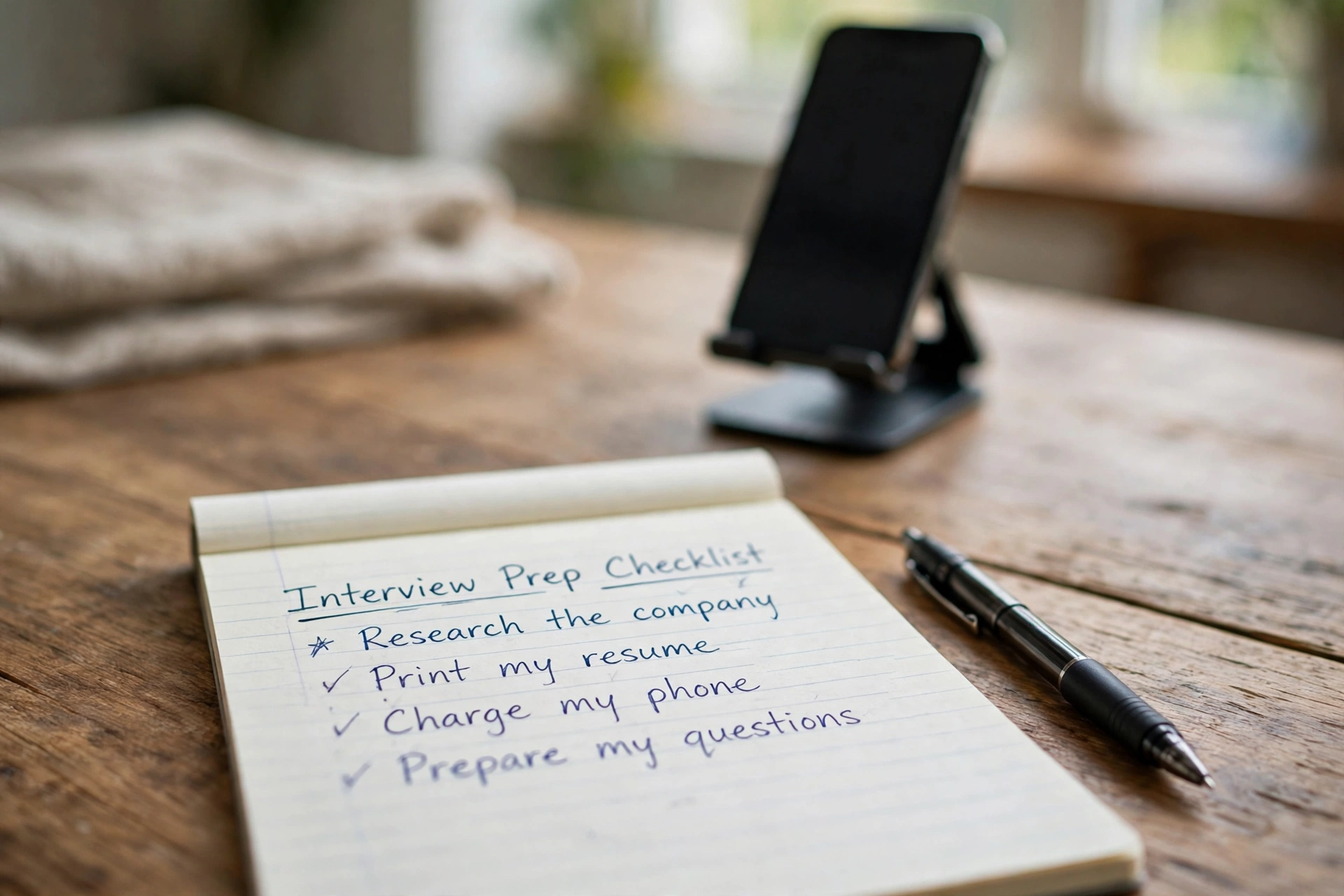
Use this checklist on the day of the call.
- Read the job post and your notes one more time.
- Charge your phone to full and test the sound.
- Find a quiet room and close the door.
- Put water, a pen, and your resume on the desk.
- Dress up and sit up straight.
- Smile when you speak and talk slowly.
- Ask two questions at the end of the call.
- Send a short thank you note after the call.
Frequently Asked Questions
How long does a phone interview last?
Most phone interviews last 15 to 30 minutes. Some are as short as 10 minutes if the company only wants a quick check. A few can run to 45 minutes if the interviewer has many questions. Plan for 30 minutes, and keep your answers short so you do not run out of time. That is why a big part of how to prepare for a phone interview is keeping your answers short.
What should I say at the start of a phone interview?
Say hello, thank the interviewer for the call, and say you are glad to speak with them. Example: “Hi, this is Sam. Thank you for calling. I am glad to speak with you about the job.” Keep it warm and short, then let the interviewer lead. A good start sets a calm tone for the whole call. A warm hello is a simple part of how to prepare for a phone interview.
Do I need to dress up for a phone interview?
Yes, dress up even though no one can see you. A neat shirt and clean shoes put you in work mode and help you sound more confident. When you dress like you mean it, your voice sounds stronger. It is a small trick, but it works. That is one more reason to learn how to prepare for a phone interview the full way, not just the tech part.
What questions should I ask at the end of a phone interview?
Ask two questions. Good ones are: “What does a normal day in this job look like?” and “What is the next step after this call?” You can also ask: “What do you like most about working here?” These questions show you are keen and you think ahead. Do not ask about pay in the first call unless the interviewer brings it up.
How do I sound confident on the phone?
Smile when you speak, sit up straight, and talk a little slower than normal. Take a breath before each answer, and pause between ideas. Keep water close by so your voice stays clear. Practice your answers out loud the day before, so the real call feels easy. A calm voice is the heart of how to prepare for a phone interview well.
What if I do not know the answer to a question?
Do not panic and do not guess. Say: “That is a good question. I have not faced that exact case, but here is how I would think about it.” Then give a short, honest answer. Interviewers like honest people. A calm, honest answer is better than a fast, made up one. This is a good line to practice when you learn how to prepare for a phone interview.
Should I send a thank you note after a phone interview?
Yes, send a short thank you email within a few hours. Thank the interviewer for their time, say one line about why you like the job, and say you look forward to the next step. Keep it to three or four lines. A short note makes you easy to remember. That note is the last step in how to prepare for a phone interview from start to finish.
Related Guides You May Like
If you liked this guide, try these easy guides from Daily Life Hacks. Learn how to set up google alerts to track news about a company, see how to remove duplicates in Excel to keep your job tracker clean, read how to calculate GPA if you are a student applying for your first job, check how to polish shoes to look neat for any interview, see how to stop coughing to keep your voice clear, and read how to make cold foam to make a nice coffee before your call. Also read how to stop spam emails, and how to stop procrastinating. You can also browse all our Money, Career and Life tips for more simple guides. These guides go well with how to prepare for a phone interview, and they help you get ready for each next step.
Final Thoughts
Learning how to prepare for a phone interview is easy once you know the golden rule: prep your answers, test your tech, and find a quiet room. Research the company, practice out loud, dress up, and sit up straight. Smile when you speak, keep your answers short, and always ask two questions at the end. Then send a short thank you note. That is all it takes. Now that you know how to prepare for a phone interview the easy way, you can walk into the call calm and ready. Good luck, and go win that job.
About the author
Alex Morgan writes about money, career, and life for Daily Life Hacks. Alex shares simple, real world tips to help you work smarter, save money, and feel good about your next step. More from Alex Morgan
One Comment