
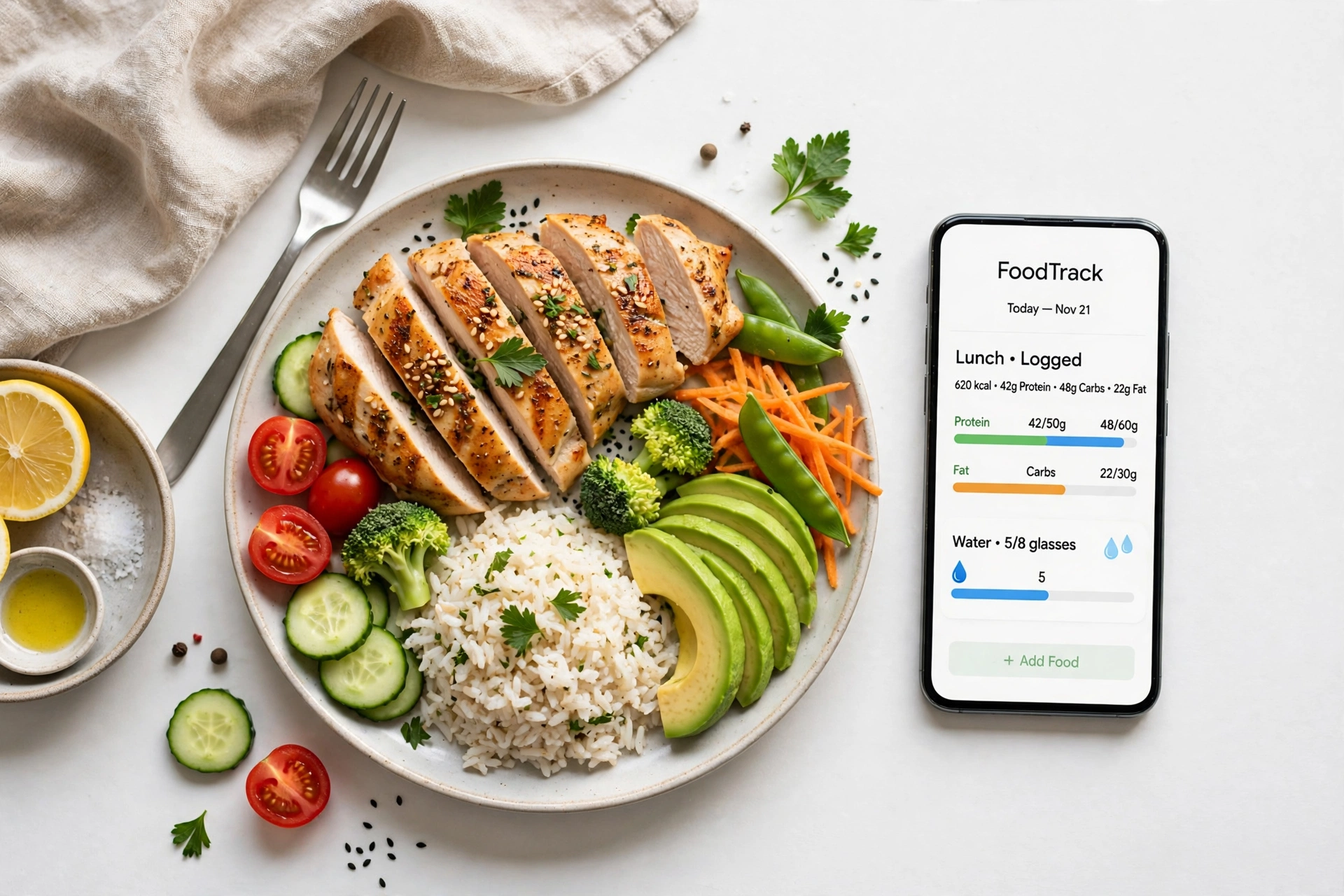
How to Track Macros: An Easy Guide for Beginners
Quick answer: how to track macros
Tracking macros means you count the grams of protein, carbs, and fat you eat each day. To learn how to track macros the easy way, find your daily calorie target, split it into protein, carbs, and fat, weigh your food with a food scale, and log it in a free app. The full guide below shows you how to track macros step by step, so you can lose weight, build muscle, or just eat better, without stress.
What Are Macros?
Macros is short for macronutrients. There are three of them: protein, carbs, and fat. Your body needs all three to work well. Protein builds and repairs muscle. Carbs give you energy. Fat helps your hormones and keeps you full. Every food has a mix of these three. For example, chicken is mostly protein, rice is mostly carbs, and olive oil is mostly fat. When you learn how to track macros, you stop guessing about your food and start knowing exactly what you eat. For more simple health guides, browse our Health and Beauty tips.
Why Should You Track Macros?
Counting calories alone does not tell the full story. Two meals can have the same calories but very different macros, and they will make you feel very different. A meal with more protein keeps you full for hours. A meal with only carbs can leave you hungry again in one hour. When you know how to track macros, you can eat the foods you love and still reach your goal, because you control the balance. People track macros to lose weight, to build muscle, to gain weight in a healthy way, or just to learn what is in their food. It takes about 10 minutes a day once you get used to it. That is the real power of knowing how to track macros: freedom with facts.
What Do You Need?
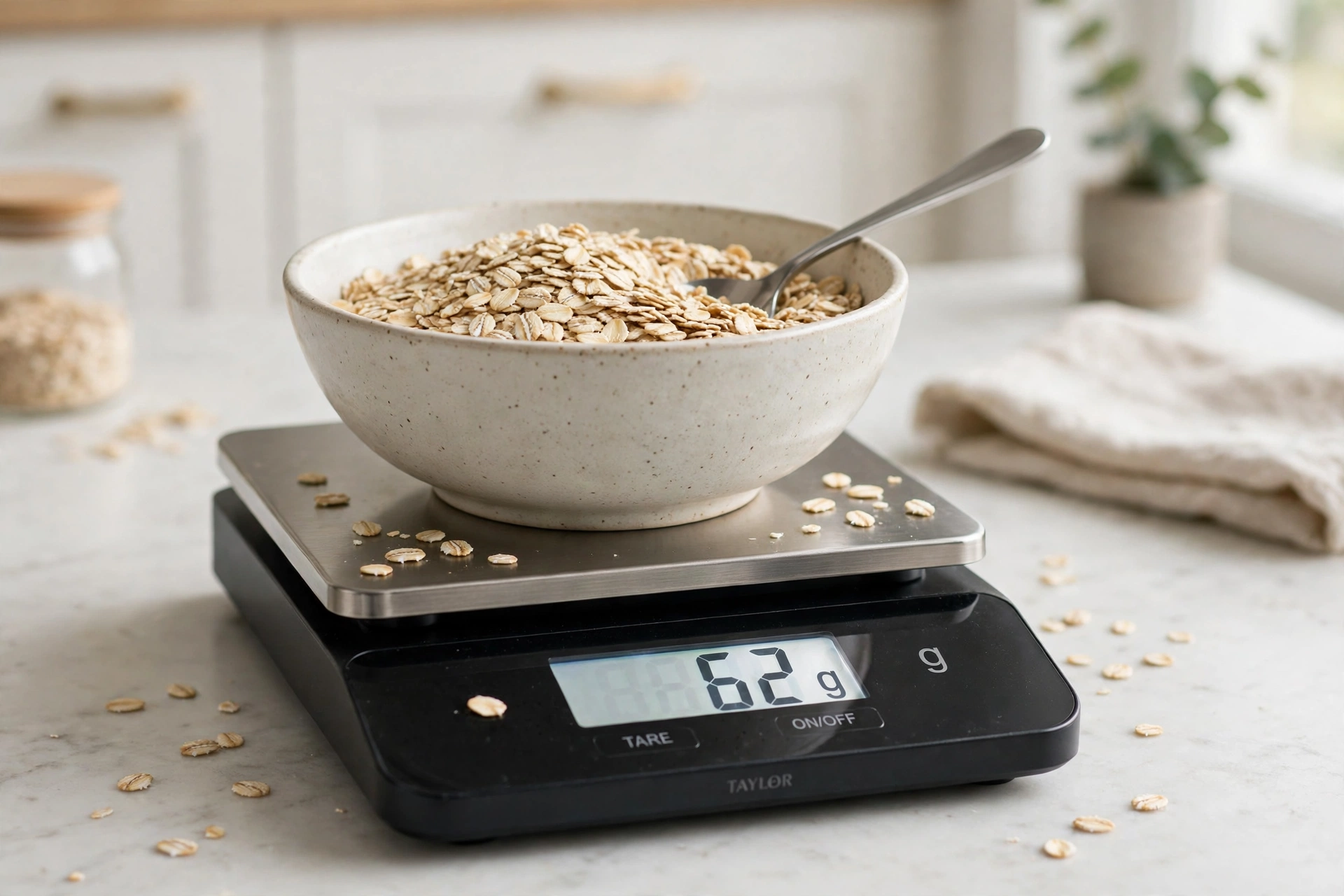
You do not need much to learn how to track macros. Here is the full list.
- A food scale, the most important tool
- A free tracking app, such as MyFitnessPal or Cronometer
- Measuring cups and spoons, for the first few weeks
- A notebook or your phone, to plan your meals and write down your targets while you learn how to track macros
- A calculator, or the app can do the math for you
How to Track Macros in 7 Easy Steps
This is the full method for how to track macros as a beginner. It works for weight loss, muscle gain, and simple healthy eating. Read the steps once, then start.
Step 1: Find Your Daily Calories
First, find how many calories you need each day. Use a free macro calculator online, such as the one on calculator.net, and type in your age, weight, height, and how active you are. The calculator will give you a number. This number is the starting point for how to track macros, not a final rule. You will adjust it later based on your results.
Step 2: Set Your Protein Target
Protein is the most important macro for most people. If you want to know how to track macros well, start with protein. A good starting point is 0.7 to 1 gram of protein for each pound of body weight. If you weigh 150 pounds, aim for 105 to 150 grams of protein a day. If that sounds like a lot, start at the low end and build up. Protein keeps you full, protects your muscle, and helps you lose fat instead of muscle.
Step 3: Set Your Fat Target
Fat should be about 20 to 30 percent of your daily calories. If you eat 2,000 calories a day, that is about 45 to 65 grams of fat. Choose healthy fats most of the time, such as olive oil, nuts, avocado, and fatty fish. You do not need to fear fat, but you do need to measure it, because fat has more calories per gram than protein or carbs. When you learn how to track macros, fat is the macro most people forget to measure.
Step 4: Set Your Carb Target
Carbs fill in the rest of your calories. Take your total calories, subtract the calories from protein and fat, and the rest is carbs. One gram of protein has 4 calories, one gram of carbs has 4 calories, and one gram of fat has 9 calories. Most apps do this math for you, so you do not need to work it out by hand. When you learn how to track macros, the app is your best friend for this step.
Step 5: Weigh Your Food
Weigh your food with a food scale for at least the first two weeks. Put your plate on the scale, set it to zero, add your food, and read the grams. This is the step most people skip when they learn how to track macros, and it is the step that matters most. Your eyes are bad at guessing portions. A portion of rice that looks small can be twice as big as you think. After two weeks, you will know your common portions by heart.
Step 6: Log Everything in the App
Log every meal, snack, and drink in your app. Search for the food, pick the right entry, and type in the grams. Log your food as you eat it, or log it the night before if you plan your meals. Do not forget small things like oil, butter, sauces, and drinks, because they add up fast. At the end of the day, check your totals against your targets. That daily check is how to track macros without stress.
Step 7: Check Your Progress and Adjust
Weigh yourself 2 to 3 times a week, at the same time of day, and look at the weekly average. If your weight moves in the right direction, keep going. If nothing changes for two weeks, change your calories by 100 to 200 a day and wait another two weeks. Small changes work better than big ones. When you know how to track macros, you can adjust your plan with facts, not guesses.
How to Track Macros for Weight Loss
To lose weight, you need to eat fewer calories than you burn. A good start is to eat 300 to 500 calories less than your maintenance level each day. Keep your protein high, because protein keeps you full and protects your muscle while you lose fat. Fill the rest with carbs and fat in a mix you enjoy. Some people like more carbs, some like more fat. Both can work, so pick the mix you can stick with. To learn how to track macros for weight loss, remember that the best plan is the one you can follow for months, not days.
How to Track Macros to Lose Weight Without Feeling Hungry
Hunger is the biggest reason people quit. Here are simple ways to stay full while you learn how to track macros to lose weight.
- Eat protein at every meal
- Fill half your plate with vegetables
- Drink water before meals
- Eat slowly and stop when you feel full, not stuffed
- Save some carbs for the evening if you get hungry at night
- Sleep 7 to 8 hours, because poor sleep makes you hungrier
If you are always hungry, your calories may be too low, or your protein may be too low. Raise one of them a little and see how you feel.
How to Track Your Macros Without a Scale
You do not always need a scale. Once you know your portions, you can use your hand as a guide. Your palm is about one portion of protein. Your fist is about one portion of carbs or vegetables. Your cupped hand is about one portion of carbs like rice or oats. Your thumb is about one portion of fat like oil or butter. This hand method is a good way to learn how to track your macros when you eat out or travel. It is not as exact as a scale, but it keeps your plan on track when you learn how to track macros on the go.
How to Track My Macros: A Simple Day of Eating
Here is what a simple day can look like for someone who eats about 2,000 calories, with 140 grams of protein, 200 grams of carbs, and 65 grams of fat. This is just an example, not a plan for everyone.
- Breakfast: Greek yogurt with berries and oats
- Lunch: Chicken breast, rice, and salad with olive oil
- Snack: Apple with peanut butter
- Dinner: Salmon, potatoes, and green beans
- Evening snack: Cottage cheese with fruit
Each meal has protein, carbs, and a little fat. That balance is the heart of how to track macros. You can swap any food for another food with similar macros. That is the freedom of tracking macros: you are not stuck with one menu. For more easy recipes and food ideas, browse our Cooking and Food guides.
Common Foods and Their Macros

Use this quick list to learn the macros in foods you eat often. Knowing these numbers makes how to track macros much easier. All amounts are for 100 grams, unless it says one piece.
- Chicken breast: 31 g protein, 0 g carbs, 3.6 g fat
- Eggs, one large: 6 g protein, 0.6 g carbs, 5 g fat
- Greek yogurt, plain: 10 g protein, 3.6 g carbs, 0.4 g fat
- Cooked rice: 2.7 g protein, 28 g carbs, 0.3 g fat
- Oats, dry: 13 g protein, 66 g carbs, 7 g fat
- Salmon: 20 g protein, 0 g carbs, 13 g fat
- Banana, one medium: 1.3 g protein, 27 g carbs, 0.4 g fat
- Peanut butter: 25 g protein, 20 g carbs, 50 g fat
- Olive oil, one spoon: 0 g protein, 0 g carbs, 14 g fat
- Bread, one slice: 4 g protein, 15 g carbs, 1 g fat
Meal Prep Makes Tracking Macros Easy
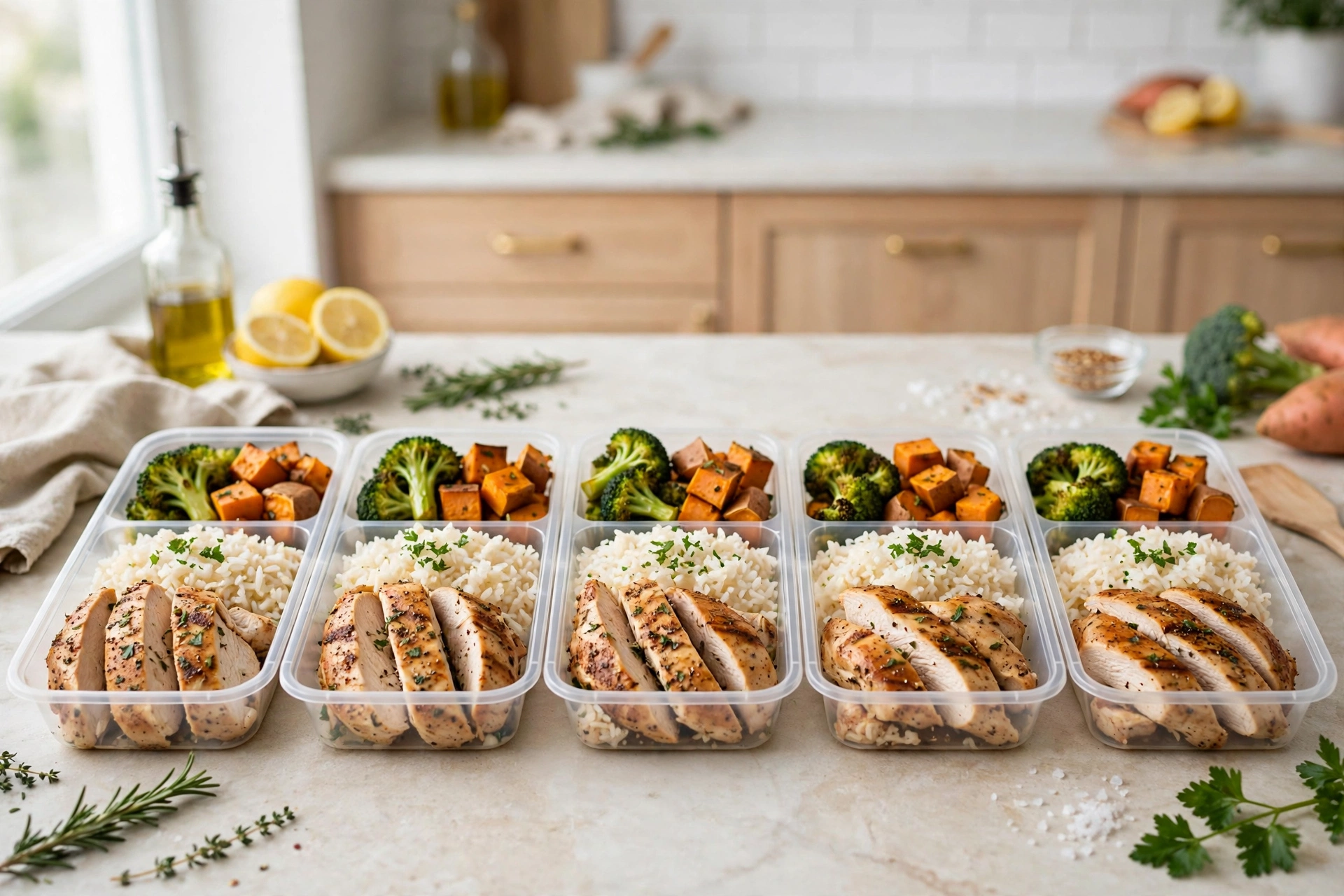
Meal prep is the easiest way to stick with tracking. When you learn how to track macros with meal prep, you remove the daily guesswork. Cook your protein, carbs, and vegetables in big batches twice a week, then pack them into containers. When it is time to eat, you just grab a container and log it. No cooking, no guessing, no extra dishes. After you prep, clean up the kitchen and run the dishwasher, and if your dishwasher smells or your dishes look cloudy, learn how to clean dishwasher filter to keep it working well. A clean kitchen makes healthy eating much easier.
Mistakes to Avoid When You Track Macros
Many people make these mistakes when they learn how to track macros. Avoid them and you will get better results with less stress.
- Guessing portions instead of weighing food
- Forgetting to log oil, butter, sauces, and drinks
- Setting calories too low and giving up in one week
- Changing your targets every day instead of waiting two weeks
- Eating too little protein
- Quitting after one bad day instead of starting fresh the next day
- Using only the app and never checking your weight trend
How to Track Macros: Quick Checklist
Use this checklist every day until tracking feels easy. It covers each step of how to track macros in one short list.
- Weigh your food with a food scale.
- Log every meal, snack, and drink in the app.
- Hit your protein target first.
- Check your totals at the end of the day.
- Weigh yourself 2 to 3 times a week.
- Adjust calories by 100 to 200 only if nothing changes for two weeks.
- Be patient, because real change takes weeks, not days.
Frequently Asked Questions
How do I start tracking macros as a beginner?
Start by finding your daily calories with a free macro calculator. Set your protein, fat, and carb targets, get a food scale, and log your food in a free app for two weeks. Weigh your food, log everything, and adjust based on your weight trend.
How much protein should I eat a day?
A good starting point is 0.7 to 1 gram of protein for each pound of body weight. If you weigh 150 pounds, aim for 105 to 150 grams a day. Active people and people who want to build muscle should aim for the higher end.
Can I track macros without a food scale?
Yes, you can use your hand as a guide. Your palm is one portion of protein, your fist is one portion of carbs or vegetables, your cupped hand is one portion of rice or oats, and your thumb is one portion of fat. A scale is more exact, but the hand method works well when you eat out.
How long does it take to see results from tracking macros?
Most people see a change in 2 to 4 weeks if they follow their targets. Your weight can go up and down each day, so look at your weekly average, not one single day. If nothing changes for two weeks, adjust your calories by 100 to 200 a day.
Is tracking macros safe?
Tracking macros is safe for most healthy adults. It is a way to learn about your food, not a diet rule. If you have a health problem, are pregnant, or have a history of eating problems, talk to your doctor or a dietitian first. This guide is general info only, not medical advice.
Do I have to track macros forever?
No, most people do not track forever. After a few months, you will know your portions and your common foods by heart. Many people track for 3 to 6 months, learn what works, then eat the same way without logging every day. You can always start tracking again if your goal changes.
Related Guides You May Like
If you liked this guide, try these easy guides from Daily Life Hacks. Learn how to wash pillows to keep your bed fresh, see how to clean a whiteboard when your board gets stained, read how to clean dishwasher filter to keep your dishwasher working well, and check how to polish shoes to keep your leather shoes shiny. Also read how to clean an oven, how to wash silk, and how to sterilize jars. Also learn how to remove duplicates in Excel to clean your spreadsheet data fast. Also read how to get water out of your ear, how to stop coughing, how long does a root canal take, how much caffeine is too much, how to learn spanish fast, how to learn japanese, how to learn a new language, how to calculate gpa, how long have humans been on earth, how to practice spanish speaking, how to learn photography, how many states of united states, how many steps in a mile, how to make cold foam, why is my husband yelling at me, and what is a duvet cover. Also read how to fix printer streaks, how to iron a shirt, how to clean a blender, and how to reduce ping. Also read how to make tea, how to remove a splinter, how to clean a hairbrush, and my wife is yelling at me. Also read how many miles is a 5k. Also read how to stop spam emails, how to stop procrastinating, and how to prepare for a phone interview. Also read how to draw anime eyes. You can also browse all our Health and Beauty tips for more simple guides.
Final Thoughts
Learning how to track macros is simple once you know the steps. Find your calories, set your protein, fat, and carb targets, weigh your food, log it in an app, and adjust based on your progress. You do not need to be perfect. You just need to be steady. Now that you know how to track macros the easy way, start today with one meal. Log it, learn from it, and build from there. Your future self will thank you.
About the author
Emma Carter is the founder of Daily Life Hacks. She is a mom of four and a tech lover, and she tests every tip in real, busy family life first. More from Emma Carter, and see how to clean bamboo flooring, and see how to clean baseboards, and see how to clean hardwood floors, and see how to polish stainless steel, and see how to remove stains from carpet, and see how to wash wool blanket, and see how to format a usb drive, and see how to reset router, and see how to remove malware, and see how to remove malware from android, and see how to use a vpn, and see how to spot phishing emails, and see how to set up google alerts, and see how to change default browser to track news online to stay safe online to stay safe online to clean your phone to clean your device to fix slow WiFi to clean up your drive to keep your wool blanket soft to keep your carpets clean to shine your sinks and appliances to keep your wood floors shiny to keep your white trim bright to keep your bamboo floors shiny


